
Property investment stats for Streatham Hill, South West London
A complete guide to property investment in Streatham Hill.
Last updated: 9 October 2026
Investment summary
Streatham Hill is a lively corner of South West London, marked by a youthful, highly educated population and a strong presence of professionals. The area’s property market is dominated by private renters, with owner-occupation less common — a pattern that’s entirely normal for London but stands out compared to the rest of Britain. The average rental yield sits at 5.6%, which is a notable figure for investors seeking steady income. However, capital growth over the past year has changed by -0.9%, and the three-year figure shows a change of -0.3%, suggesting a market that’s been more about stability than rapid appreciation.
Median prices reflect London’s usual premium, with a median price per square foot of £623 per sq ft and a price-to-income ratio of 6.5. Liquidity is reasonable, with 709 sales annually and properties spending an average of 72 days on the market.

Key investment stats for Streatham Hill
Median price per sq ft
£623 / sq ft
Average rental yield
5.6%
Capital growth (1y)
-0.9%
Sales in past year
709
* Property stats calculated for last full calendar year (2024).
Live property stats in Streatham Hill
Live prices in Streatham Hill, South West London
* Extreme prices clipped for legibility
Properties for sale
Median price
£450,000
25% of properties below...
£350,000
75% of properties below...
£600,000
Most expensive property
£4,000,000
Live listings
625
Median days on market
72
Should you invest in Streatham Hill?
Opportunities
- Investors can achieve strong rental yields, with the average sitting at 5.6% and the top postcode district also delivering 5.6%.
- The high proportion of private renters, in the 89th percentile nationally, means consistent tenant demand for rental properties.
- The area’s large population of young professionals and students, both in the 80th percentile or higher, underpins rental demand and reduces void risk.
Risks
- Capital growth has changed by -0.9% in the past year and by -0.1% on an annualised three-year basis, offering little evidence of rapid price appreciation.
- The rent-to-income ratio is 31.2%, which may stretch affordability for some tenants and potentially limit further rental growth.
- The median gap between achieved and asking prices is £9,998 (the typical achieved discount), so buyers may need to be realistic about negotiating on price.
Outlook
Streatham Hill’s property market is set to continue its pattern of stability, supported by a vibrant rental sector and a steady flow of young, degree-educated residents. The high proportion of private renters in the 89th percentile and strong rental yields of 5.6% make this area particularly appealing for income-focused investors. While capital growth figures — -0.9% over one year and -0.3% over three — suggest limited short-term upside, the area’s fundamentals remain robust.
Asking prices for a three-bedroom house are currently £750,000, with typical rents at £3,100; two-bedroom flats are asking £450,000 for sale and £2,200 for rent. With properties averaging 72 days on the market and annual sales at 709, liquidity is healthy. Investors should expect modest capital gains but can rely on solid rental returns and enduring demand in this ever-popular London neighbourhood.
Property market trends in Streatham Hill
Average yield (%)
Median price per sq ft (£/sq ft)
Live properties in Streatham Hill
Investment properties in Streatham Hill, South West London

£1,000,000
5 bedroom semi-detached house for sale
Kings Avenue, SW12

£280,000 - Offers in Excess of
2 bedroom apartment for sale
Dunsfold House, Deepdene Garden
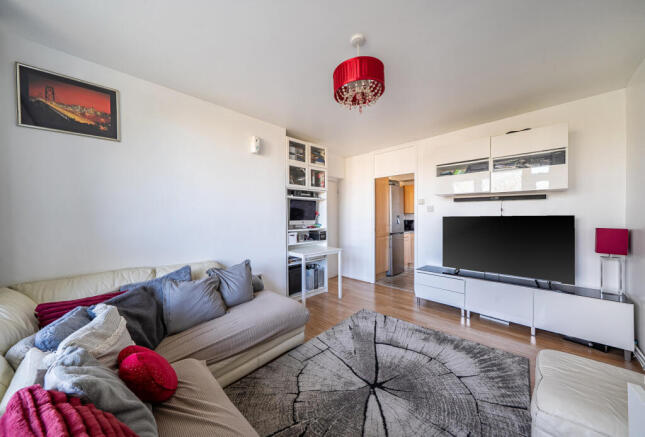
£325,000 - Offers Over
2 bedroom apartment for sale
Perry House, Tierney Road, London, ...
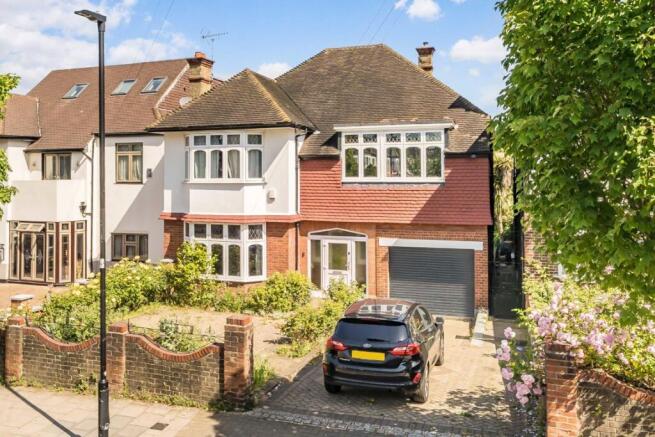
£1,250,000
4 bedroom detached house for sale
Mount Ephraim Road, Streatham

£800,000
4 bedroom terraced house for sale
Mount Ephraim Road, Streatham, Lond...

£1,250,000 - Offers in Region of
5 bedroom semi-detached house for sale
Fernwood Avenue, SW16

£235,000 - Offers Over
1 bedroom apartment for sale
Leigham Avenue, Drew House Leigham ...

£200,000 - Guide Price
2 bedroom flat for sale
Flat 8 Lycette House, New Park Road...
Achieved vs asking prices
Key takeaway: Balanced market
Discounts exist, but they won't transform deal economics on their own.
Headline stats
• Median discount: £9,998
• 1 in 4 properties sell at > £20,000 below asking
• 1 in 10 properties sell at > £38,200 below asking
In percentage terms:
• Median discount of 1.4%
• 25% of properties discounted by > 3.3%
• 10% of properties discounted by > 5.3%
Best places to invest in Streatham Hill
Top postcodes for rental yield and (annualised) capital growth
Nearby and related areas
Data sources
GeoGlider calculates property investment stats by blending official and proprietary datasets. Here's a quick overview of key sources and how we use them:
HM Land Registry: Property transaction and sold-price records for England & Wales used to calculate historical capital growth, price levels and comparables.
Office for National Statistics (ONS): Demographic and economic indicators for the UK, including Census 2021, supporting area profiling and market context.
Ordnance Survey: Authoritative UK geospatial data powering accurate boundaries, roads and terrain for mapping and spatial analysis.
GeoProp: Our proprietary AI pipeline that processes millions of property listings to extract rich features and live market signals.
Department for Levelling Up, Housing & Communities: Energy Performance Certificate (EPC) scores and property floor areas.
HM Revenue & Customs (HMRC): Household income and employment data to understand local affordability and economic conditions.
Data is updated continuously, matched across sources and rigorously validated.