
Property investment stats for Potton, East of England
A complete guide to property investment in Potton.
Last updated: 9 October 2026
Investment summary
Potton is a market town that has seen steady, if unspectacular, property price movement over the past few years. Over the last year, capital growth changed by -1.1%, while the three-year figure sits at 2.0% with an annualised rate of 0.7%. The town leans heavily towards owner-occupation, sitting in the 76th percentile nationally, and its price-to-income ratio of 6.3 hints at a level of affordability that is reasonable for the region. Sales activity is modest, with 81 homes changing hands each year, and properties typically spend 56 days before finding a buyer.

Key investment stats for Potton
Median price per sq ft
£345 / sq ft
Average rental yield
-
Capital growth (1y)
-1.1%
Sales in past year
81
* Property stats calculated for last full calendar year (2024).
Live property stats in Potton
Live prices in Potton, East of England
* Extreme prices clipped for legibility
Properties for sale
Median price
£460,000
25% of properties below...
£339,950
75% of properties below...
£569,950
Most expensive property
£2,750,000
Live listings
73
Median days on market
56
Should you invest in Potton?
Opportunities
- The top postcode district offers a rental yield of 3.4%, which may appeal to investors prioritising income over rapid capital growth.
- With a price-to-income ratio of 6.3, Potton is more affordable than many commuter towns, offering scope for future demand from buyers priced out elsewhere.
- The high proportion of couples (98th percentile) suggests stable demand for family-sized homes, particularly three-bedroom houses with a median asking price of £399,950.
Risks
- Capital growth over the past year has changed by -1.1%, which may not excite those seeking quick returns.
- The private rented sector sits below the national midpoint (37th percentile), so rental demand may be more limited than in larger towns.
- Liquidity is moderate, with properties taking 56 days to sell, which could mean longer holding periods if you need to exit quickly.
Outlook
Looking ahead, Potton’s property market seems likely to continue its steady course. The combination of broad owner-occupation and a strong presence of couples should underpin demand for traditional family homes. With the median asking price for a two-bedroom flat at £215,000 and three-bedroom house at £399,950, affordability is a relative strength compared to more overheated parts of the region.
Rental yields, while not headline-grabbing at 3.4%, are steady enough for investors with a long-term outlook. I expect neither fireworks nor shocks in the next year — Potton’s appeal lies in its stability and measured pace rather than dramatic short-term gains.
Property market trends in Potton
Average yield (%)
Median price per sq ft (£/sq ft)
Live properties in Potton
Investment properties in Potton, East of England

£500,000 - Guide Price
3 bedroom detached bungalow for sale
Everton Road, Potton

£500,000 - Offers Over
4 bedroom chalet for sale
Judith Gardens, Potton, Sandy
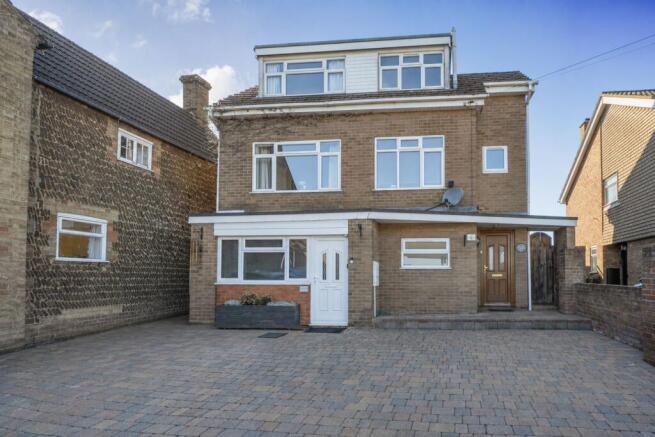
£500,000 - Guide Price
5 bedroom detached house for sale
Biggleswade Road, Sandy, SG19
Best places to invest in Potton
Top postcodes for rental yield and (annualised) capital growth
Nearby and related areas
Data sources
GeoGlider calculates property investment stats by blending official and proprietary datasets. Here's a quick overview of key sources and how we use them:
HM Land Registry: Property transaction and sold-price records for England & Wales used to calculate historical capital growth, price levels and comparables.
Office for National Statistics (ONS): Demographic and economic indicators for the UK, including Census 2021, supporting area profiling and market context.
Ordnance Survey: Authoritative UK geospatial data powering accurate boundaries, roads and terrain for mapping and spatial analysis.
GeoProp: Our proprietary AI pipeline that processes millions of property listings to extract rich features and live market signals.
Department for Levelling Up, Housing & Communities: Energy Performance Certificate (EPC) scores and property floor areas.
HM Revenue & Customs (HMRC): Household income and employment data to understand local affordability and economic conditions.
Data is updated continuously, matched across sources and rigorously validated.